
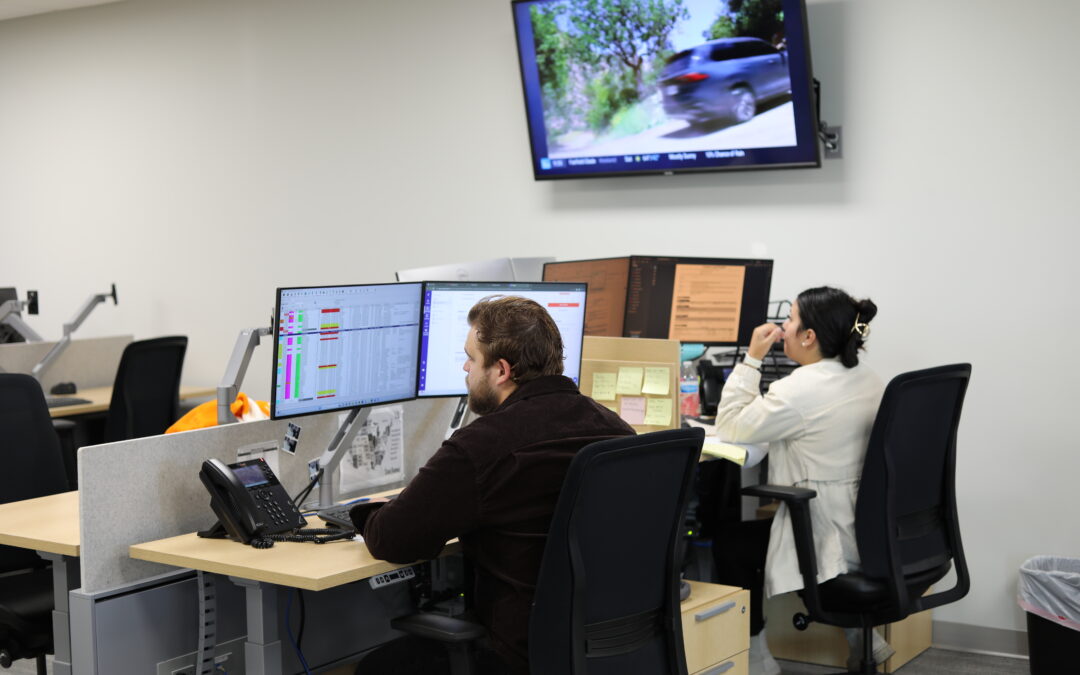
What is a truck dispatcher? A truck dispatcher is a logistics professional responsible for coordinating the movement of freight. They serve as the primary link between truck drivers, carriers, shippers, and receivers. While the driver is the face of the delivery, the dispatcher is the behind-the-scenes coordinator ensuring that the delivery happens safely, legally, and profitably.
In 2026, the role of truck dispatcher has evolved from a “radio operator” into a sophisticated logistics specialist. Dispatchers must balance three competing interests:
- Clients, who demand safe, cheap, and on-time delivery.
- Truck Drivers, who need profitable loads, safe routes, and schedules that respect legal driving hours.
- The trucking company that wants to maximize profit by minimizing “deadhead” miles (driving empty) and keeping the fleet moving.
Truck Dispatcher vs. Freight Broker: Knowing the Difference
It is important to distinguish between these roles to understand how the industry operates:
Truck Dispatcher: Works directly for the carrier (the trucking company). Their goal is to keep that company’s trucks moving and profitable.
Freight Broker: An independent intermediary between shippers and carriers. They negotiate rates and earn a commission on the difference between what the shipper pays and what the carrier accepts.
Freight Dispatcher: Often an independent operator who may represent several different drivers or small fleets to find them loads.
Core Responsibilities of a Truck Dispatcher
The daily life of a dispatcher involves juggling many moving parts to ensure a seamless supply chain.
Load Matching and Negotiation
Dispatchers use load boards (like DAT or Truckstop) and industry networks to find freight. They don’t just take any load; they negotiate the best possible rates, fuel surcharges, and detention pay to maximize the driver’s earnings and the carrier’s profit.
Route Optimization and Scheduling
Using GPS and mapping tools, dispatchers plan the fastest and safest paths. This includes accounting for weather, traffic, construction, and weight restrictions. The goal is to minimize “deadhead” miles (driving an empty truck) by lining up the next load immediately after a delivery.
Compliance and Record-Keeping
Dispatchers ensure drivers stay within Hours of Service (HOS) regulations set by the FMCSA. They manage critical paperwork, including:
- Rate confirmations: a legal document that details the movement of a load from one location to another.
- Bills of Lading (BOL): a legal document that acts as a receipt for cargo, a contract of carriage and document of title, listing important details such as shipper, good description, and destination
- Invoicing and logs
- Permits and safety documentation
Constant Communication
The dispatcher is the driver’s lifeline. They provide real-time updates on weather and traffic, while simultaneously keeping the customer informed of delivery estimates. If a mechanical breakdown occurs, the dispatcher coordinates repairs or alternate transportation.
Essential Skills for Success as a Dispatcher
Because dispatching is a high-pressure, people-centered job, it requires a specific blend of soft and technical skills:
- Multitasking: Managing multiple drivers simultaneously while answering phones and monitoring load boards.
- Effective Communication: Being clear and professional with brokers, while remaining empathetic and supportive to drivers who may be stressed on the road.
- Problem-Solving: The ability to think quickly when a load cancels last minute or weather affects a route.
- Negotiation: Salesmanship is required to convince brokers to trust your carrier and pay a premium rate.
- Technical Proficiency: Comfort with Transportation Management Systems (TMS), GPS tracking, and digital logging tools.
How to Become a Dispatcher
One of the most appealing aspects of this career is its accessibility. You do not need a college degree to start, though it can be a challenging job that requires a steep learning curve.
Education and Training
- Required Education: A high school diploma or GED is the standard baseline.
- Dispatcher Training: While not legally required, taking a Truck Dispatcher Training Course is highly recommended. These programs teach the nuances of load boards, FMCSA regulations, and industry-specific software.
- Dispatcher Certifications: Credentials from organizations like the National Dispatch and Freight Certification Association (NDFCA) can boost your credibility.
From Driver to Dispatcher
Many truck drivers eventually transition into dispatching. Their hands-on experience on the road makes them exceptional at the job because they understand the challenges drivers face, leading to better route planning and stronger driver-dispatcher relationships.
Salary and Environment
- Earnings: Typically range from $35,000 to $60,000 annually, with many dispatchers earning additional commissions or performance bonuses.
- Environment: Most work in fast-paced office settings, but an increasing number of dispatchers now work remotely using cloud-based logistics software.
Is hiring a Dispatch Service Worth It?
For independent owner-operators, hiring a third-party dispatch service (which usually charges 5–10% of the load revenue) can be a smart investment.
- Pros: Significant time savings, higher-paying loads through expert negotiation, and reduced administrative stress.
- Cons: The cost of the service and the need to vet the dispatcher for transparency and ethics.
The Future of Dispatching
As technology evolves, AI and predictive analytics are beginning to automate routine tasks like basic freight matching. However, the human element remains indispensable. Technology cannot replace the intuition and relationship-building skills required to manage the typical supply chain chaos that defines the trucking industry.
Drive Your Career Forward with Roane Transportation
The relationship between a driver and their dispatcher is the heartbeat of a successful logistics operation, but it truly thrives when backed by a company that values both parties. At Roane Transportation, we understand that our dispatchers and drivers are more than just roles to fill—these people are the key to our industry-leading safety and excellence. Whether you are a veteran driver looking for a healthy work-life balance and weekly home time, or a logistics professional seeking a fast-paced environment built on integrity, there is a place for you on our team. Join a company that invests in your career growth with specialized training and competitive pay. Visit our careers page today to see how you can drive your future forward with Roane Transportation.